.webp)
Hypothyroid Disease & Thyroid Disorders — Report-Based Ayurvedic Treatment
Thyroid health is more than a single TSH report — understand the possible factors behind your symptoms through medical reports, detailed assessment and an Ayurveda approach.
Understanding Hypothyroid Disease & Thyroid Disorders — Report-Based Ayurvedic Treatment
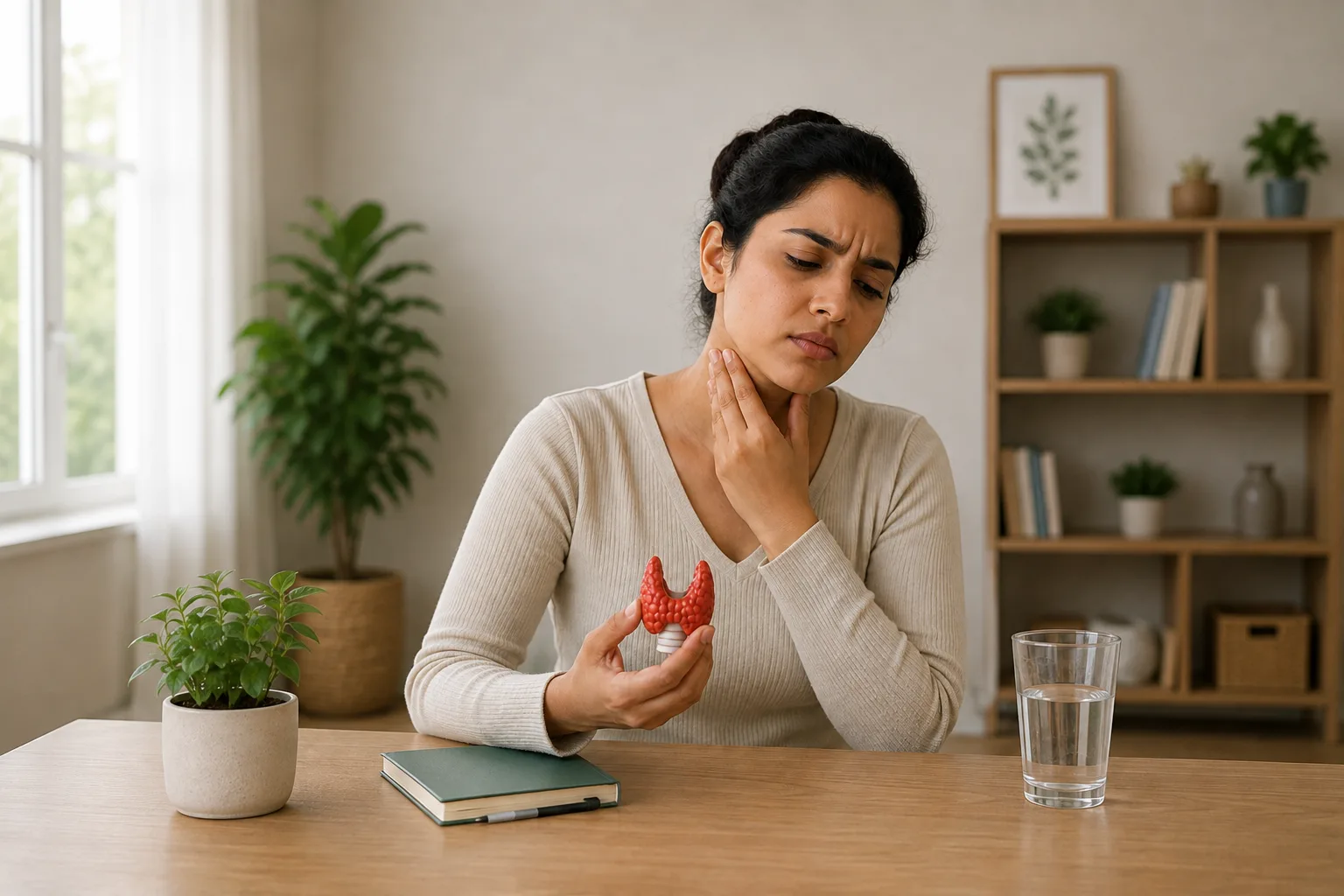
The thyroid gland plays an important role in several essential functions of the body, including metabolism, energy regulation and other processes that influence everyday health. When thyroid function changes, a person may experience symptoms such as tiredness, changes in weight, sensitivity to cold or heat, changes in bowel habits, skin and hair changes, menstrual changes or other health concerns. Hypothyroid Disease is one of the commonly encountered thyroid conditions, but thyroid health can involve several different conditions, including Goiter, Hashimoto Thyroid Disease, hyperthyroidism and other Thyroid Gland Issues. At Green Zone Nature Ayurveda, we do not begin the treatment journey by looking at symptoms alone. We begin by understanding the available medical reports, TSH results, previous investigations, health history, current symptoms, previous treatments, lifestyle, dietary habits and other relevant health information. After reviewing the available information, our Ayurvedic doctors conduct a detailed assessment and understand the health picture through an Ayurveda perspective. Based on the assessment, an appropriate Customized Ayurvedic treatment and follow-up approach may be planned.
Doctor-led, root-cause and report-based care — a plan made only for you.
Common Symptoms
What's Behind It
- Hashimoto Thyroid Disease — Hashimoto Thyroid Disease is an autoimmune condition that can affect the thyroid gland and is an important cause of hypothyroidism in many populations.
- Autoimmune Factors — Autoimmune activity can affect thyroid tissue and thyroid function in conditions such as Hashimoto thyroid disease and certain other thyroid-related disorders.
- Thyroid Hormone Imbalance — Changes in thyroid hormone production or regulation can contribute to symptoms associated with Hypothyroid Disease or hyperthyroidism.
- Iodine-Related Factors — Both inadequate and excessive iodine intake can affect thyroid function in certain circumstances, making individual dietary and medical context important.
- Family History — A family history of thyroid disease or autoimmune conditions may be relevant when evaluating an individual's thyroid health.
- Certain Medicines — Some medicines can influence thyroid function or affect thyroid test results, so current and previous medication history is relevant during assessment.
- Previous Thyroid Conditions — Previous thyroid disease, thyroid procedures, surgery or other thyroid-related medical history can influence current thyroid health.
- Nutritional Factors — Overall nutrition and dietary patterns can contribute to general metabolic health and may be relevant when assessing thyroid-related symptoms.
- Stress, Sleep & Lifestyle — Stress levels, sleep quality, physical activity and daily routine may influence overall health and should be considered as part of a broader assessment.
- Other Underlying Health Conditions — Several health conditions can produce symptoms that resemble thyroid problems. This is why symptoms should be considered alongside medical reports and appropriate testing.
Risks & Complications
Diagnosis & Reports
At Green Zone Nature Ayurveda, the assessment of thyroid-related health begins with understanding the available medical information and reports. We do not recommend developing a treatment approach solely from a symptom such as fatigue, weight gain, constipation or hair changes because these symptoms may have several possible causes. Instead, the available health information is reviewed first. Step 1 — Review of Medical Reports: Relevant thyroid reports, previous investigation results, medical history and available health information may be reviewed. These may include thyroid-related laboratory results and other investigations that have already been performed. Step 2 — Understanding TSH: TSH is an important laboratory marker used when evaluating thyroid function. TSH results are generally interpreted in context with other relevant thyroid tests, symptoms and clinical information. An abnormal TSH result does not by itself explain every symptom, and thyroid health should be understood using the broader clinical picture. Step 3 — Understanding Your Symptoms: The Ayurvedic doctor may assess: How long symptoms have been present. Whether symptoms are constant or intermittent. Whether symptoms have changed over time. Previous thyroid diagnoses. Previous thyroid treatment. Changes in energy levels. Changes in weight. Digestive and bowel patterns. Sleep patterns. Skin and hair changes. Menstrual changes where relevant. Neck swelling. Eye-related symptoms. Other relevant health changes. Step 4 — Previous Treatment Review: Previous medicines, supplements, thyroid treatment, procedures and other relevant treatments may be reviewed. This provides important context when understanding the current health situation. Step 5 — Assessment of Possible Thyroid Conditions: Depending on the available medical information, the assessment may consider conditions such as: Hypothyroid Disease. Hashimoto Thyroid Disease. Hyperthyroidism. Goiter. Other Thyroid Gland Issues. Thyroid Eye Disease where relevant. The purpose is not to assume that every person has the same thyroid condition, but to understand the available medical picture before planning care. Step 6 — Ayurveda Assessment: After reviewing the available medical information, symptoms and health history, the Ayurvedic doctor considers the individual's health through an Ayurved framework. This may include consideration of: Prakriti. Dosha balance. Agni. Digestion. Metabolism. Diet. Daily routine. Sleep. Physical activity. Stress. Overall health. Step 7 — Treatment Planning: Only after the reports, health information and assessment have been understood is an appropriate Customized Ayurvedic treatment approach considered. Where further medical investigation or specialist evaluation is appropriate, it should not be delayed.
Ayurvedic Understanding of Hypothyroid Disease & Thyroid Disorders — Report-Based Ayurvedic Treatment
How Ayurveda Looks at Thyroid-Related Health: Ayurveda traditionally views health as an interconnected system rather than considering one organ or one symptom in complete isolation. From an Ayurved perspective, factors such as Prakriti, Doshas, Agni, digestion, metabolism, diet, lifestyle, sleep, daily routine and overall health may be considered when understanding an individual's health. Thyroid-related symptoms can vary considerably between individuals. Two people with similar thyroid reports may not necessarily have identical symptoms, lifestyle factors, dietary patterns, digestive patterns or overall health requirements. Therefore, Ayurveda assessment focuses on understanding the broader health picture. Digestion & Agni: Ayurveda gives significant importance to Agni, or digestive and metabolic functioning. Digestive patterns, appetite, bowel habits and dietary routine may therefore be considered as part of the broader Ayurveda assessment. Dosha Consideration: Ayurveda assessment may also consider the individual's Prakriti and the condition of the Doshas in relation to the symptoms and broader health picture. This does not mean that every thyroid condition is attributed to one Dosha or treated through one fixed formula. Lifestyle & Daily Routine: Sleep, physical activity, stress, meal timing, dietary habits and daily routine can also form part of the Ayurveda understanding of overall health. Combining Medical Information With Ayurveda: At Green Zone Nature Ayurveda, Ayurveda understanding does not begin by ignoring available medical information. Instead: Medical Reports → Health Assessment → Ayurveda Understanding → Customized Care → Follow-Up This allows available modern medical information, including relevant thyroid reports and TSH results, to be considered alongside Ayurveda assessment. Important Medical Context: Ayurvedic care should not be presented as a substitute for necessary medical diagnosis, monitoring or emergency care. People with diagnosed thyroid conditions should continue appropriate medical supervision and discuss any changes to prescribed treatment with their treating healthcare professional.
The Green Zone Approach
At Green Zone Nature Ayurveda, the thyroid treatment journey starts with understanding the patient's health through medical reports and available health information. We do not want to look at Hypothyroid Disease, Goiter, thyroid symptoms or other Thyroid Gland Issues as isolated problems. A person's available medical reports, TSH results, previous investigations, medical history, previous treatments, symptoms, dietary habits, lifestyle, sleep, physical activity and other relevant information can all contribute to understanding the individual's health picture. Our Approach Medical Reports First — Relevant reports and available health information are reviewed before treatment planning. Detailed Assessment Next — Symptoms, thyroid history, lifestyle, diet, previous treatment and other relevant health factors are assessed. Ayurveda Understanding After That — The assessed health picture is considered through Ayurved principles. Customized Ayurvedic Care — Appropriate treatment, dietary guidance, lifestyle guidance and therapies may be planned according to the assessment. Regular Follow-Up — Treatment response, symptoms and changing health requirements are reviewed over time. Why This Approach Matters A person experiencing fatigue may have thyroid dysfunction, nutritional factors, sleep-related issues, stress-related factors or another underlying condition. Similarly, a person with an abnormal TSH result may require a broader medical interpretation rather than assuming that the number alone explains every symptom. This is why Green Zone's approach focuses on understanding the health picture first and then planning care. Green Zone Treatment Flow Medical Reports → TSH & Health Information → Detailed Assessment → Ayurveda Understanding → Customized Ayurvedic Treatment → Guidance & Therapies → Regular Follow-Up
- 1
Medical Reports & TSH Review
Relevant thyroid reports, TSH results, previous investigations, medical history, previous treatments and available health information are reviewed as the starting point of the treatment journey
- 2
Detailed Thyroid Health Assessment
Symptoms, Hypothyroidism Symptoms, duration of symptoms, weight changes, energy levels, digestion, sleep, lifestyle, dietary habits, physical activity and other relevant health factors are assessed.
- 3
Understanding the Underlying Health Picture
Available medical information and assessment findings are reviewed together to understand the individual's thyroid-related health situation and identify factors that may require further evaluation.
- 4
Ayurvedic Understanding of Your Health
The health picture is considered through Ayurved principles, including Prakriti, Doshas, Agni, digestion, metabolism, lifestyle
- 5
Customized Ayurvedic Treatment Plan
An appropriate treatment approach is developed according to the available reports, consultation, assessment, Ayurveda understanding and individual health requirements.
- 6
Guided Ayurvedic Care & Follow-Up
Recommended medicines, dietary guidance, lifestyle measures and suitable therapies are followed with regular review of symptoms and treatment response.
- 7
Ongoing Treatment Review & Health Support
Thyroid-related symptoms, available health information, treatment response and changing health requirements are reviewed throughout continued care.
Our Treatment Approach
Medical Reports & Health Information Review
Relevant thyroid reports, TSH results, previous investigations, medical history, previous thyroid treatments, medicines and available health information are reviewed first. This helps establish the medical context before an Ayurvedic treatment approach is considered.
Detailed Thyroid Health Assessment
The doctor evaluates symptoms such as fatigue, energy changes, weight changes, digestive symptoms, temperature sensitivity, skin and hair changes, menstrual changes, neck swelling and other relevant symptoms. The duration, severity and pattern of symptoms are also considered.
Understanding Thyroid Gland Issues
Thyroid symptoms are considered alongside available reports, previous diagnosis, lifestyle, diet, sleep, physical activity, previous treatments and other relevant health factors to understand the broader health picture.
Ayurvedic Understanding
After reviewing medical information and completing the health assessment, the Ayurvedic doctor considers the individual's Prakriti, Doshas, Agni, digestion, metabolism, diet, lifestyle and overall health as part of the Ayurveda assessment.
Customized Ayurvedid Medicines
Where appropriate, Ayurved medicines may form part of the treatment plan based on the available medical information, assessment findings, symptoms and Ayurveda understanding. Treatment is not selected solely because a person has a label such as Hypothyroid Disease or Hashimoto Thyroid Disease.
Diet, Lifestyle & Daily Routine Guidance
Depending on the assessment, guidance may address dietary habits, meal routines, physical activity, sleep, stress management, hydration and other daily habits that may support broader health and treatment goals.
Ayurveda Therapies
Where considered appropriate after assessment, suitable Ayurveda therapies may be incorporated into the treatment plan. The type and frequency of therapies depend on the individual's health status, symptoms and treatment requirements.
Regular Follow-Up & Treatment Review
The treatment journey does not end with the initial prescription. Symptoms, health information, treatment response, lifestyle factors and changing requirements are reviewed during follow-up, allowing the care plan to be reassessed where appropriate.
Diet & Lifestyle
Recommended
- Fresh, balanced home-cooked meals
- Adequate protein and fibre
- A variety of vegetables and seasonal foods
- Regular and balanced meal timings
- Adequate hydration
- Nutritionally balanced meals based on individual needs
Best Avoided
- Highly processed and packaged foods
- Excess added sugar and refined carbohydrates
- Excessively fried and heavily processed foods
- Frequent late-night heavy meals
- Unnecessary restrictive diets without professional guidance
What Results to Expect
Support for Thyroid Health Management — A structured care approach focused on understanding thyroid-related health factors, symptoms, medical information and ongoing health requirements.
Support for Hypothyroid Disease Management — Report-based and assessment-led Ayurvedic care designed to support people managing Hypothyroid Disease as part of an appropriate overall health plan.
Support for Energy & Daily Well-Being — Addressing relevant lifestyle, dietary and health factors may support overall well-being and everyday functioning where thyroid-related symptoms affect daily life.
Support for Metabolic Health — Appropriate diet, lifestyle, daily routine and treatment guidance may support broader metabolic health according to individual requirements.
Support for Thyroid-Related Symptoms — Regular assessment and treatment review can help monitor relevant symptoms and changing health requirements.
Long-Term Thyroid Health Support — Continued follow-up can provide ongoing support for thyroid-related health management, lifestyle practices and treatment review.
When to Consult a Doctor
- Persistent Hypothyroidism Symptoms — Ongoing fatigue, low energy, cold sensitivity, constipation, unexplained weight changes or other persistent symptoms should be appropriately evaluated.
- Abnormal TSH Results — An abnormal TSH result should be discussed with an appropriate healthcare professional and interpreted alongside relevant thyroid tests and clinical information.
- Neck Swelling or Goiter — New, noticeable or increasing swelling in the front of the neck should be medically assessed to determine its cause.
- Eye Changes — New eye swelling, redness, pain, pressure, visual changes or significant eye discomfort requires appropriate medical attention, particularly in people with known or suspected thyroid disease.
- Significant Weight Changes — Unexplained or substantial changes in weight should be evaluated rather than automatically being attributed to thyroid problems.
- Persistent Menstrual Changes — Ongoing menstrual changes occurring alongside thyroid-related symptoms may require appropriate evaluation.
- Worsening or New Symptoms — New, severe, rapidly worsening or unexplained symptoms should receive timely medical attention.
Modern Medicine vs Ayurveda
| Aspect | Modern Medicine | Green Zone Ayurveda |
|---|---|---|
| Focus | Manages symptoms | Treats the root cause |
| Treatment | Often one-size-fits-all | Customized to your reports |
| Medication | Can mean lifelong dependence | Aims to reduce dependence over time |
| Diet & lifestyle | Secondary | Central to the plan |
| Approach | Condition in isolation | Whole-body balance |
| Goal | Symptom control | Lasting wellness & prevention |
Why Patients Trust Green Zone
15+
Years of experience
1000s
Patients guided
3
Centres across India
100%
Report-based plans
Doctors Who Treat Hypothyroid Disease & Thyroid Disorders — Report-Based Ayurvedic Treatment
-1.webp)
Dr. Neha Mahajan | Ayurvedic Doctor & Founder
BAMS · Clinical Psychologist · International Yoga Teacher
Patient Reviews
Read how our root-cause, report-based care has helped patients find lasting balance and better health.
Frequently Asked Questions
Hypothyroid Disease is a condition in which the thyroid gland does not produce sufficient thyroid hormones for the body's requirements. It can be associated with symptoms such as fatigue, low energy, cold sensitivity, constipation, weight changes, dry skin and hair changes. However, these symptoms can occur for many different reasons. Therefore, proper medical evaluation and thyroid testing are important before determining whether symptoms are related to hypothyroidism. At Green Zone Nature Ayurveda, available medical reports, TSH results, health history, symptoms, previous treatments and lifestyle information are reviewed before Ayurvedic treatment planning.
Hypothyroidism occurs when the thyroid gland does not produce enough thyroid hormone, while hyperthyroidism occurs when the thyroid produces too much thyroid hormone. Hypothyroidism may be associated with fatigue, feeling cold, constipation, dry skin, and weight gain, whereas hyperthyroidism may cause heat sensitivity, sweating, palpitations, trembling, weight loss, and difficulty sleeping. The symptoms can overlap with other conditions, so thyroid function testing is important for appropriate assessment.
TSH stands for thyroid-stimulating hormone and is an important laboratory marker used when evaluating thyroid function. TSH is generally interpreted alongside other thyroid tests, symptoms and clinical information. A single TSH value should not necessarily be used to explain every symptom a person experiences. If your TSH report is abnormal, it is important to discuss the result with an appropriate healthcare professional and understand it in the context of your complete health picture.
Hashimoto Thyroid Disease is an autoimmune condition that affects the thyroid gland and can lead to reduced thyroid function. People with Hashimoto thyroid disease may require ongoing medical evaluation and thyroid monitoring. The treatment approach depends on thyroid function, symptoms, laboratory findings and individual health requirements. At Green Zone, available medical reports and previous investigations are reviewed first, followed by Ayurveda assessment and Customized care where appropriate.
Goiter refers to enlargement of the thyroid gland. A Goiter can have different possible causes, and thyroid function may be normal, increased or decreased depending on the underlying condition. New or noticeable neck swelling should therefore be appropriately evaluated rather than assuming that every Goiter has the same cause.
Goiter Treatment depends on the underlying cause, size, symptoms, thyroid function and other medical findings. Appropriate medical evaluation may involve thyroid testing and other investigations depending on the situation. At Green Zone, any available reports and health information are reviewed before considering an Ayurveda approach. Ayurvedic care should be based on the individual's overall assessment rather than treating neck enlargement through a one-size-fits-all approach.
Thyroid Eye Disease is a condition involving tissues around the eyes that can occur alongside certain thyroid disorders, particularly autoimmune thyroid disease. Symptoms may include eye dryness, redness, swelling, pressure, discomfort, changes around the eyes or visual symptoms. New or significant eye symptoms should receive appropriate medical evaluation, particularly if the person has known or suspected thyroid disease.
Hyperthyroidism Symptoms in Females can include increased sensitivity to heat, excessive sweating, increased heart rate, changes in weight, nervousness or restlessness, sleep changes and menstrual changes. The symptoms can overlap with other health conditions, so they should not automatically be attributed to hyperthyroidism. Appropriate thyroid evaluation and medical assessment are important when hyperthyroidism is suspected.
Hyperthyroidism Treatment depends on the underlying cause and severity of the condition. People with hyperthyroidism should receive appropriate medical evaluation and monitoring because excessive thyroid hormone activity can have important effects on the body. Where Ayurvedic care is considered, it should be planned after understanding the medical condition, reports, symptoms and overall health picture. It should not be presented as a replacement for necessary medical treatment.
Green Zone follows a Medical Test-Based, Report-Based Ayurvedic Care approach. The treatment journey begins with reviewing relevant medical reports, TSH results, previous investigations, health history, symptoms and previous treatments. This is followed by a detailed health assessment and Ayurveda understanding of the individual's broader health picture. Based on the assessment, an appropriate Customized Ayurvedic treatment approach may include medicines, dietary and lifestyle guidance, suitable therapies and regular follow-up. The treatment approach is reviewed over time according to symptoms, treatment response and changing health requirements.
Related Conditions
Type 1 Diabetes Ayurvedic Care — Diabetes Management Through Ayurved
Type 1 Diabetes requires careful blood sugar monitoring and ongoing insulin management — understand your health through medical reports, detailed assessment and a supportive Ayurveda approach.
Type 2 Diabetes Ayurvedic Treatment & Diabetes Care
Type 2 Diabetes is more than a high blood sugar reading — understand your Blood Sugar Test, health history, lifestyle and underlying health factors through a report-based Ayurveda approach.
Fatty Liver Disease & Liver Disorders — Ayurvedic Care
Fatty Liver Disease and other Liver Disorders can remain unnoticed for a long time — understand your Liver Health through medical reports, detailed assessment and an Ayurveda approach.
Kidney Stones Treatment | Kidney Disease | Kidney disorders— Ayurvedic Care
Kidney Stones, Chronic Kidney Disease and other kidney conditions require more than symptom-based care — understand your kidney health through medical reports, kidney function assessment and a structured Ayurveda approach.
PCOS & PCOD Ayurvedic Treatment for Irregular Periods & Menstrual Health
PCOS & PCOD: Understand Your Hormonal Health, Menstrual Cycle & Overall Wellbeing
Joint & Spine Ayurvedic Treatment for Knee Pain, Arthritis & Joint Pain
Joint Pain, Knee Pain, Arthritis, Back Pain, and Joint Stiffness can affect movement and everyday comfort — understand the possible factors behind your joint and spine concerns.
Book Your First Free Consultation Today
Talk to Dr. Neha Mahajan and the Green Zone team — online or offline. Root-cause, report-based and personalised care, made only for you.
+91 8962625757 · centres@gzna.in