.webp)
Kidney Stones Treatment | Kidney Disease | Kidney disorders— Ayurvedic Care
Kidney Stones, Chronic Kidney Disease and other kidney conditions require more than symptom-based care — understand your kidney health through medical reports, kidney function assessment and a structured Ayurveda approach.
Understanding Kidney Stones Treatment | Kidney Disease | Kidney disorders— Ayurvedic Care
Kidney health includes a broad range of conditions, from Kidney Stones and urinary blockage to Chronic Kidney Disease, Polycystic Kidney Disease, progressive loss of kidney function and other renal conditions. Kidney Stones commonly cause sharp pain in the back, side, lower abdomen or groin and may also be associated with blood in the urine, painful urination, urinary urgency, nausea or vomiting. Some stones pass on their own, while larger stones or stones that block the urinary tract may require medical treatment. Chronic Kidney Disease, on the other hand, is often very different. Early CKD may have few or no noticeable symptoms, which is why blood and urine testing are important for identifying and monitoring kidney disease. Kidney function is commonly assessed using measures such as eGFR, while urine albumin can help identify kidney damage. At Green Zone Nature Ayurveda, the treatment journey begins with understanding available medical reports, kidney function tests, urine reports, previous investigations, health history, symptoms, previous treatments, dietary habits, lifestyle and other relevant health information. Our Ayurvedic doctors then assess the broader health picture before considering an appropriate Customized Ayurvedic care approach and follow-up plan. Medical Reports First. Kidney Function Assessment Next. Ayurveda Understanding After That. Customized Care With Regular Follow-Up.
Doctor-led, root-cause and report-based care — a plan made only for you.
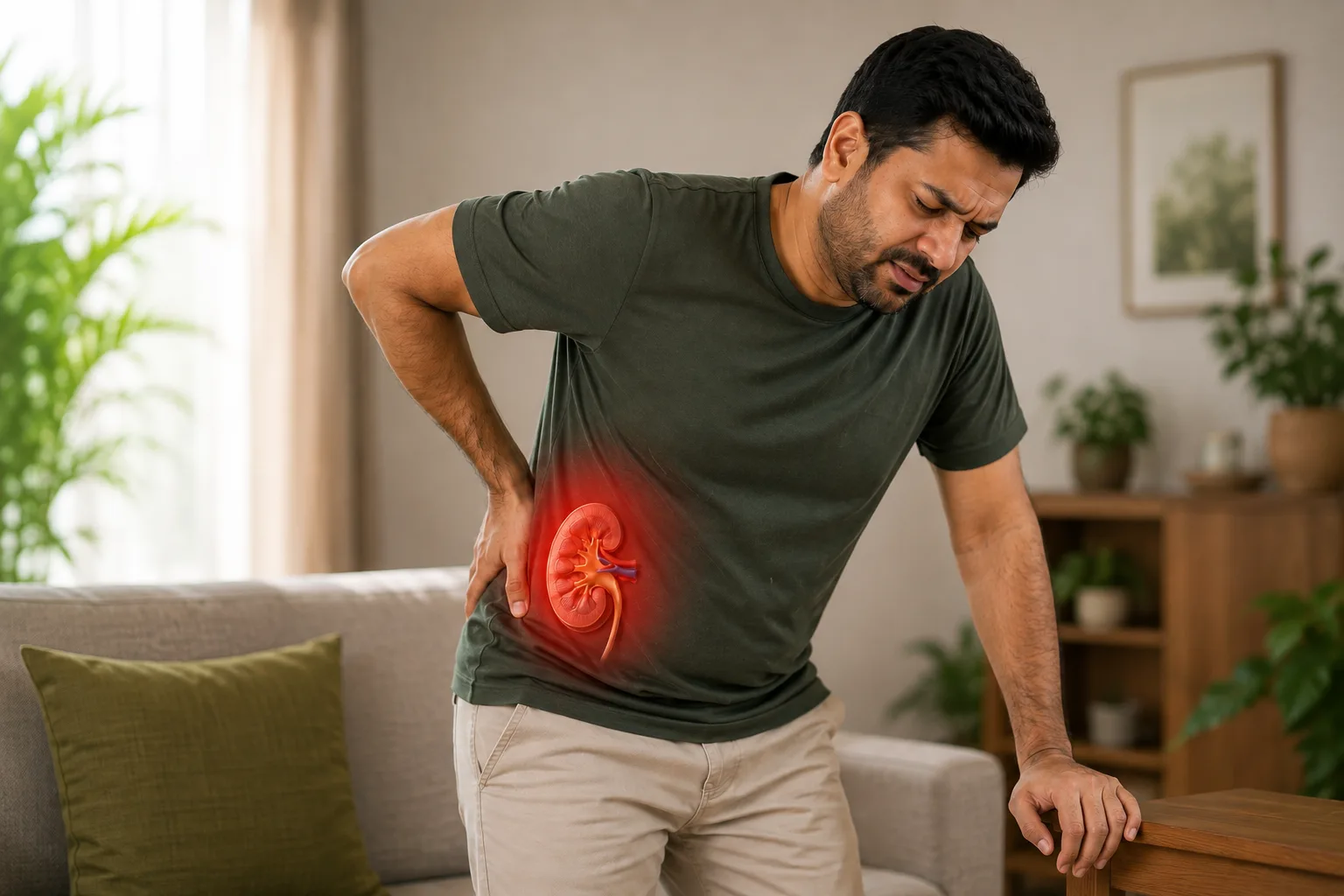
Common Symptoms
What's Behind It
- Diabetes & High Blood Sugar — Persistently high blood sugar can damage the kidneys' filtering system over time and is one of the most common causes of chronic kidney disease (CKD) in adults. Diabetes-related kidney disease can develop gradually and may have few noticeable symptoms in its early stages.
- High Blood Pressure & Cardiovascular Health — Long-term high blood pressure can damage the blood vessels and filtering structures of the kidneys, reducing their ability to remove waste and excess fluid. Heart and blood-vessel conditions may also increase the risk of kidney disease and reduced kidney function.
- Kidney Stones & Urinary Blockage — Kidney stones can develop when certain minerals and substances become concentrated in the urine and form solid deposits. Complicated or recurrent kidney stones, particularly when they cause urinary blockage or other complications, may contribute to kidney damage and can be associated with chronic kidney disease.
- Polycystic Kidney Disease & Genetic Factors — Polycystic kidney disease (PKD) is a genetic condition in which multiple fluid-filled cysts develop in the kidneys. PKD can affect kidney structure and function, cause high blood pressure, and may progress to chronic kidney disease and kidney failure.
- Kidney Infections, Inflammation & Glomerular Conditions — Kidney infections, inflammatory conditions, and diseases affecting the kidney's filtering units can damage kidney tissue and, in some cases, contribute to chronic kidney disease. Untreated urinary infections or urinary blockages may also cause complications requiring prompt medical care.
- Certain Medicines, Toxins & Previous Kidney Injury — Some medicines or substances can be harmful to the kidneys, while a previous episode of acute kidney injury may increase the risk of developing chronic kidney disease. The risk depends on the medicine, dose, duration, existing kidney health, and individual medical condition.
- Autoimmune & Other Underlying Health Conditions — Conditions in which the immune system attacks the body's own tissues, along with certain metabolic, vascular, liver, heart, and other systemic conditions, can affect kidney function and contribute to kidney disease. Identifying the underlying cause is important for appropriate kidney disease assessment and management.
Risks & Complications
Diagnosis & Reports
`We review your medical history, symptoms, previous treatment, and latest kidney-related reports as part of your overall health assessment. Depending on your condition and the concerns being evaluated, investigations may include serum creatinine and eGFR to assess kidney function, urea/BUN and electrolytes, urinalysis, urine protein or urine albumin measurements such as the urine albumin-to-creatinine ratio (uACR), and imaging such as a kidney or urinary-tract ultrasound when clinically appropriate. Additional investigations may be recommended depending on your symptoms, medical history, and suspected kidney condition. If you have recent blood tests, urine reports, kidney-function tests, ultrasound or other relevant medical reports, upload them before your consultation so our Ayurvedic doctors can review the available information as part of your kidney health assessment. Early kidney disease may not cause noticeable symptoms, so appropriate testing can be important for identifying kidney problems and monitoring kidney function.
Ayurvedic Understanding of Kidney Stones Treatment | Kidney Disease | Kidney disorders— Ayurvedic Care
Ayurveda traditionally considers health through an interconnected view of digestion, metabolism, elimination, diet, lifestyle, daily routine and overall physiological balance. At Green Zone Nature Ayurveda, this Ayurveda understanding is incorporated after reviewing available medical information, particularly for kidney-related conditions where objective testing and monitoring are important. Kidney health can involve very different clinical situations. A person with Kidney Stones may have an entirely different health picture from someone with Chronic Kidney Disease or Polycystic Kidney Disease. Therefore, the Ayurveda approach should not assume that one treatment is suitable for everyone. Digestion & Metabolism: An Ayurveda assessment may consider digestive health, Agni, food habits, meal patterns and metabolic factors as part of the broader health picture. Hydration & Daily Routine: Fluid intake, daily routine, physical activity, sleep and dietary habits may be reviewed according to the person's health condition. However, fluid recommendations cannot be generalized for every kidney patient, particularly for people with advanced CKD, heart problems, fluid restrictions or kidney failure. Such recommendations should be based on appropriate medical advice. Dosha & Individual Assessment: The Ayurvedic doctor may consider Prakriti, Doshas and other Ayurved principles when developing a broader understanding of the individual's health. Medical Reports Remain Important: For kidney conditions, Ayurveda understanding should not replace medical monitoring. Relevant objective information may include: Creatinine. eGFR. Urine albumin. Urine examination. Blood pressure. Imaging. Stone-related investigations. Other relevant laboratory reports. Green Zone Philosophy Medical Reports First → Kidney Function Assessment → Ayurveda Understanding → Customized Care → Continuous Follow-Up The purpose is to integrate Ayurveda assessment with an evidence-based understanding of the person's medical condition rather than treating kidney disease from symptoms alone. Important Medical Safety Note People with advanced CKD, Renal Failure, urinary obstruction, severe infection, suspected Kidney Cancer or other serious kidney conditions may require specialist nephrology, urology, oncology, emergency or hospital care. Ayurvedic care should not delay necessary medical treatment.
The Green Zone Approach
At Green Zone Nature Ayurveda, our approach to Kidney Disorders begins with understanding your kidney health through your symptoms, medical history, relevant blood and urine reports, kidney-function tests, imaging reports, current medicines, nutrition, lifestyle, and individual health factors. Rather than following the same approach for every kidney concern, our Ayurvedic doctors consider the specific condition and overall health assessment before guiding a Customized Ayurvedic care approach. Kidney stones, chronic kidney disease (CKD), polycystic kidney disease (PKD), and reduced kidney function may require different care and monitoring. Appropriate medical or specialist care is considered wherever required.
- 1
Kidney Health Assessment
We begin by understanding your kidney-related concerns, including symptoms such as kidney or flank pain, changes in urination, blood in urine, swelling, fatigue, or other urinary symptoms. Our Ayurvedic doctors consider your medical history, previous treatment, current medicines, relevant blood and urine reports, kidney-function tests, imaging reports, lifestyle, nutrition, and other available health information as part of the initial assessment.
- 2
Understanding Your Kidney Health & Possible Contributing Factors
Kidney disorders can have different causes and may affect individuals differently. During the consultation, we consider factors such as diabetes, blood pressure, kidney stones, urinary problems, infections, family history, medications, lifestyle, and available kidney reports. For conditions such as chronic kidney disease (CKD) or polycystic kidney disease (PKD), appropriate medical evaluation and ongoing kidney-function monitoring remain important.
- 3
Customized Ayurvedic Care Plan
Based on your consultation and overall health assessment, our Ayurvedic doctors may develop a Customized Ayurvedic care approach according to your individual needs. Depending on your condition, this may include appropriate Ayurved medicines, dietary guidance, lifestyle recommendations, supportive care, and suitable Ayurveda therapies. For kidney stones, the appropriate medical treatment can depend on factors such as stone size, location, and type.
- 4
Guided Ayurvedic Care Begins
Once your care approach is established, you begin the recommended Ayurvedic care with appropriate guidance. This may include Ayurveda formulations, individualized nutrition and lifestyle guidance, hydration advice where appropriate, physical activity recommendations, and suitable supportive therapies based on your health assessment. If you have reduced kidney function or kidney failure, fluid and dietary requirements may be different and should be guided by your healthcare professional.
- 5
Regular Kidney Health Monitoring & Treatment Review
Regular follow-up allows our Ayurvedic doctors to review changes in your symptoms, urinary health, lifestyle, overall wellbeing, and available kidney reports. Where appropriate, relevant results such as creatinine, eGFR, urine albumin or other kidney-function markers may be considered during ongoing health review. Your Ayurvedic care approach may be reviewed according to your ongoing health needs, while prescribed medicines or essential medical treatment should not be stopped, reduced, or changed without guidance from your treating healthcare professional.
- 6
Long-Term Kidney Health Support
As your care continues, the focus can extend towards sustainable nutrition, appropriate hydration, physical activity, healthy weight management, blood pressure and blood sugar management, medication adherence, sleep, and other healthy daily habits. Continued follow-up and appropriate kidney-function monitoring can help you and your healthcare team stay informed about changes in kidney health over time.
Our Treatment Approach
Medical Reports & Kidney Function Review
Relevant blood reports, urine reports, creatinine, eGFR, urine albumin, imaging reports, previous investigations, previous diagnoses and treatment history are reviewed first to understand the current kidney health picture.
Detailed Kidney Health Assessment
Symptoms, urinary changes, pain, swelling, previous Kidney Stones, blood pressure, diabetes history, dietary habits, hydration patterns, sleep, lifestyle, medicines and other relevant health factors are assessed according to the individual's condition.
Understanding the Underlying Kidney Condition
The available medical information is considered to understand whether the health picture involves Kidney Stones, Chronic Kidney Disease, Polycystic Kidney Disease, Renal Failure or another Kidney Disease, because each condition can require a different medical pathway.
Ayurveda Clinical Assessment
After reviewing the medical information, the Ayurvedic doctor considers the broader health picture through Ayurved principles, including Prakriti, Doshas, Agni, digestion, metabolism, diet, lifestyle and daily routine.
Customized Ayurvedic Treatment
Where Ayurvedic care is appropriate, the treatment approach is planned according to the available reports, assessment findings, symptoms, health status and Ayurveda understanding rather than applying the same treatment to every person with Kidney Disease.
Kidney Stone Treatment Support
For people with Kidney Stones, the care approach may consider the available stone-related reports, imaging, symptoms, stone history and relevant health factors before determining appropriate Ayurveda support. Ayurvedic Treatment for Kidney Stones should only be considered after understanding the medical condition, particularly when stone size, location or possible obstruction may require medical or urological intervention.
Diet, Hydration & Lifestyle Guidance
Appropriate dietary, hydration, physical activity, sleep and daily-routine guidance may be included according to the individual's medical condition and reports. Kidney-related dietary and fluid requirements can vary considerably, particularly in Chronic Kidney Disease, so generalized recommendations should not be applied without proper assessment.
Kidney Disease Treatment & Ongoing Support
The broader Kidney Disease Treatment approach may include appropriate Ayurvedic care alongside necessary medical monitoring, depending on the condition and stage of disease. For people requiring specialist nephrology, urology, oncology, dialysis, surgery or other medical treatment, Ayurvedic care should not replace or delay that care.
Regular Follow-Up & Treatment Review
Kidney-related symptoms, available reports, treatment response, dietary and lifestyle factors and changing health requirements are reviewed during follow-up so that the care approach can be reassessed when necessary.
Diet & Lifestyle
Recommended
- Fresh, home-cooked balanced meals
- Fresh vegetables and appropriate fibre
- Appropriate protein intake based on your condition
- Controlled salt intake
- Adequate hydration as advised by your doctor
- A diet plan customized to your kidney condition and reports
Best Avoided
- Excess salt and very salty foods
- Highly processed and packaged foods
- Excess sugary drinks and added sugar
- Unnecessary supplements or herbal products without medical advice
- Excessive use of over-the-counter pain medicines
- Extreme diets or fasting without professional guidance
What Results to Expect
Support for Kidney Health Management — A structured approach focused on understanding available kidney reports, symptoms, health factors and ongoing treatment requirements.
Support for Kidney Stone Care — Assessment-led care focused on understanding stone-related symptoms, previous stone history and appropriate supportive measures.
Support for Kidney Function Monitoring — Regular review of relevant health information and available kidney reports can support ongoing monitoring of kidney health.
Support for Urinary & General Well-Being — Appropriate care may support comfort and day-to-day well-being according to the individual's health condition.
Support for Diet & Lifestyle Management — Customized guidance can help address relevant dietary, lifestyle and daily routine factors according to kidney health requirements.
Long-Term Kidney Health Support — Continued follow-up allows symptoms, health information and changing requirements to be reviewed over time.
When to Consult a Doctor
- Persistent or Recurrent Kidney Symptoms — Consult a doctor if kidney-related symptoms such as recurring flank or back pain, changes in urination, foamy urine, swelling, fatigue, or other urinary concerns persist, return repeatedly, or gradually worsen. Early chronic kidney disease may have few or no symptoms, so people with ongoing risk factors may also need appropriate kidney testing.
- Severe Kidney or Flank Pain — Seek medical attention promptly if you develop severe or worsening pain in the back, side, lower abdomen, or groin, particularly when kidney stones are suspected. Larger or obstructing kidney stones may require urgent medical treatment depending on their size, location, and effect on urine flow.
- Blood in Urine or Significant Urinary Changes — Consult a doctor if you notice pink, red, brown, or visibly blood-stained urine, persistent foamy urine, difficulty urinating, or a significant change in how much or how often you urinate. These symptoms can have several possible causes and should be appropriately evaluated.
- Fever, Chills, Painful Urination or Vomiting — Seek medical care promptly if kidney or urinary symptoms occur along with fever, chills, painful urination, nausea, vomiting, or cloudy or foul-smelling urine, as these symptoms may indicate a kidney infection or another condition requiring timely treatment.
- Swelling, Breathlessness or Advanced Kidney Symptoms — Consult a doctor if you develop persistent swelling in your legs, feet, ankles, hands, or around the eyes, particularly when accompanied by fatigue, nausea, reduced appetite, changes in urination, shortness of breath, or other symptoms associated with worsening kidney function.
- Abnormal Kidney Reports or High-Risk Health Conditions — If your serum creatinine, eGFR, urine protein or albumin results are abnormal, or if you have diabetes, high blood pressure, a family history of kidney disease or kidney failure, recurrent kidney stones, or another condition that may affect kidney health, discuss appropriate kidney evaluation and monitoring with a healthcare professional.
Modern Medicine vs Ayurveda
| Aspect | Modern Medicine | Green Zone Ayurveda |
|---|---|---|
| Focus | Manages symptoms | Treats the root cause |
| Treatment | Often one-size-fits-all | Customized to your reports |
| Medication | Can mean lifelong dependence | Aims to reduce dependence over time |
| Diet & lifestyle | Secondary | Central to the plan |
| Approach | Condition in isolation | Whole-body balance |
| Goal | Symptom control | Lasting wellness & prevention |
Why Patients Trust Green Zone
15+
Years of experience
1000s
Patients guided
3
Centres across India
100%
Report-based plans
Doctors Who Treat Kidney Stones Treatment | Kidney Disease | Kidney disorders— Ayurvedic Care
-1.webp)
Dr. Neha Mahajan | Ayurvedic Doctor & Founder
BAMS · Clinical Psychologist · International Yoga Teacher
Patient Reviews
Read how our root-cause, report-based care has helped patients find lasting balance and better health.
Frequently Asked Questions
Kidney Stones are solid deposits that form in the urinary tract. They can cause sharp pain in the back, side, lower abdomen or groin and may also cause blood in the urine, painful urination, urgency, nausea or vomiting. Treatment depends on the stone's size, location, composition and whether it is causing obstruction.
Kidney Stone Treatment depends on the size, location and type of stone. Some small stones may pass naturally, while larger or obstructing stones may require medical or urological treatment. Appropriate evaluation is particularly important when there is severe pain, vomiting, fever, chills or difficulty passing urine.
Ayurvedic Treatment for Kidney Stones may be considered as part of an appropriately assessed care plan. At Green Zone, the approach should begin with understanding available reports and imaging, stone size and location, urinary symptoms and overall health before considering Ayurvedic care. Ayurvedic care should not delay urgent urological treatment when there is obstruction, severe pain, infection, inability to pass urine or another serious complication.
Chronic Kidney Disease is a long-term condition in which the kidneys are damaged or kidney function is reduced. CKD can progress over time, and early disease may produce few or no noticeable symptoms. Blood and urine tests are important for identifying and monitoring CKD.
CKD Kidney Disease and CKD Chronic Kidney Disease are commonly used search phrases referring to Chronic Kidney Disease. CKD involves persistent kidney damage or reduced kidney function, and its assessment generally considers measures such as eGFR and urine albumin.
Renal Kidney Disease is a broad search phrase used to describe disease affecting the kidneys. The specific medical condition can vary considerably, ranging from Kidney Stones to chronic kidney disease, inherited disorders or other renal conditions. The exact diagnosis and kidney-function status are important before determining treatment.
Polycystic Kidney Disease is a genetic condition in which multiple fluid-filled cysts develop in the kidneys. PKD can enlarge or change the structure of the kidneys and may reduce kidney function over time. It can also be associated with high blood pressure, pain and other complications.
PKD Kidney Disease is a common search variation referring to Polycystic Kidney Disease. PKD is a genetic kidney disorder, and its management depends on the type of PKD, kidney function, blood pressure, symptoms and other clinical factors.
Renal Failure refers to severe loss of kidney function. When kidney function falls to kidney-failure levels, the kidneys can no longer adequately perform their normal functions, and treatment may involve dialysis, kidney transplantation or, in selected situations, conservative management.
Chronic Kidney Disease Treatments depend on the cause and stage of CKD. Management may include monitoring kidney function, managing blood pressure and diabetes, appropriate dietary and lifestyle measures, prescribed medicines and other condition-specific care. Advanced kidney failure may require dialysis or transplantation.
Kidney Disease Treatment depends entirely on the specific kidney condition. Kidney Stone Treatment, Chronic Kidney Disease management, Polycystic Kidney Disease care and treatment for Renal Failure are not the same. At Green Zone, available medical reports and the underlying health condition should be understood before considering a Customized Ayurvedic care approach.
Ayurvedic care may be considered as part of an individualized care plan for some patients, but the approach should depend on the medical condition, reports, kidney function, symptoms and overall health. For advanced Chronic Kidney Disease, Renal Failure, urinary obstruction, suspected infection or suspected Kidney Cancer, appropriate specialist medical care and monitoring remain essential. Ayurvedic care should not be presented as a replacement for dialysis, transplant, cancer treatment, emergency treatment or other necessary medical care.
Kidney Cancer is cancer that develops in the kidney. Early kidney cancer may not cause noticeable symptoms. Possible symptoms later can include blood in the urine, persistent side pain, an abdominal lump, loss of appetite or unexplained weight loss. These symptoms can have other causes as well, so appropriate diagnostic testing is important
Green Zone follows a Medical Test-Based, Report-Based Ayurvedic Care approach. The treatment journey begins with available medical reports, kidney function information, urine reports, imaging and previous treatment records. This is followed by a detailed health assessment and Ayurveda understanding of the individual's broader health picture. Where appropriate, Customized Ayurvedic care may include medicines, diet and lifestyle guidance, suitable therapies and regular follow-up. For conditions requiring nephrology, urology, oncology, dialysis, surgery or emergency treatment, appropriate medical care should remain an essential part of the treatment journey.
Related Conditions
Type 1 Diabetes Ayurvedic Care — Diabetes Management Through Ayurved
Type 1 Diabetes requires careful blood sugar monitoring and ongoing insulin management — understand your health through medical reports, detailed assessment and a supportive Ayurveda approach.
Type 2 Diabetes Ayurvedic Treatment & Diabetes Care
Type 2 Diabetes is more than a high blood sugar reading — understand your Blood Sugar Test, health history, lifestyle and underlying health factors through a report-based Ayurveda approach.
Fatty Liver Disease & Liver Disorders — Ayurvedic Care
Fatty Liver Disease and other Liver Disorders can remain unnoticed for a long time — understand your Liver Health through medical reports, detailed assessment and an Ayurveda approach.
Hypothyroid Disease & Thyroid Disorders — Report-Based Ayurvedic Treatment
Thyroid health is more than a single TSH report — understand the possible factors behind your symptoms through medical reports, detailed assessment and an Ayurveda approach.
PCOS & PCOD Ayurvedic Treatment for Irregular Periods & Menstrual Health
PCOS & PCOD: Understand Your Hormonal Health, Menstrual Cycle & Overall Wellbeing
Joint & Spine Ayurvedic Treatment for Knee Pain, Arthritis & Joint Pain
Joint Pain, Knee Pain, Arthritis, Back Pain, and Joint Stiffness can affect movement and everyday comfort — understand the possible factors behind your joint and spine concerns.
Book Your First Free Consultation Today
Talk to Dr. Neha Mahajan and the Green Zone team — online or offline. Root-cause, report-based and personalised care, made only for you.
+91 8962625757 · centres@gzna.in